Thursday, January 31, 2008

Eating at Me... Dear ****:

January 31, 2008

Dear Ms. ****:

I have feedback concerning the instructor of the intermediate yoga class I attended on January 30, 2008.

**** has a good overall teaching presence for standing postures and even gave some tips that will improve my poses. However, I got the feeling that she was inexperienced in regards to the etiquette of handling a class and giving proper instruction and set-up concerning safety in advanced postures.

That being said, I have some constructive criticism:
  • Keep stories told in class on an uplifting note. Talk of depressing subject matter is inappropriate and produces and radiates negative class emotion. Bringing the subject up repeatedly does not make light, in fact worsens, the matter. Talking for the sake of filling time is unnecessary… if it’s essential, find a yoga related story to recount.
  • Choosing one person to jokingly insult throughout class is inappropriate and attacks their dignity. The person has no choice but to brush it off while the students get a laugh at their expense. This is not beneficial to the mood, spirit or flow of the class.
  • Stating, “I hate this pose, but you do it anyway,” put a negative spin on a posture that was new to me before I had even attempted it. If an experienced practitioner such as **** hates the pose, it will be nearly impossible for a student to find a liking for it. Even saying, “This pose is challenging or difficult for me” could cause concern but not in the same manner. There’s no benefit in knowing that she hates the pose or negating it’s benefits.
  • Her teaching cues for head and shoulder stand to brand new students, who had admittedly never done these poses, could have resulted terribly. An experienced student could be safe in the pose, but only because they know better and need not rely solely on her instruction. I was shocked when a lady fell out of shoulder stand into the mirrored wall.
  • Asking the students if they got drunk prior to class and if that’s the reason why our head and shoulder stand poses are bad is not appropriate. It could be that the teaching cues and class control isn’t strong or thorough enough.
I understand the need for a substitute instructor and leaving us in the hands of an inexperienced teacher is not the answer. In the future, a team teaching environment would better serve the safety of the class.

Thank you for your time and attention.

Monday, January 28, 2008

WWF Slovenija Stamps


Just because I like them.

Labels: , , ,

Saturday, January 26, 2008

Become Familiar with Your Feet

I taught my first credit yoga class of the Spring 2008 semester this morning. Part of the process is learning to build a pose from the ground up. Your feet are the foundation of the standing poses and are very important when practicing balancing poses.

To begin, sit on the floor and grasp one foot, pull it in towards your groin and LOOK at the bottom of it.

Identify the four corners of the foot and TOUCH each point to bring conscious physical and mental link, attention and awareness to your foot. This touch forms a brain to foot connection. People don't often care about their feet until something bad happens. Stub your toe? Electric sensations flood pain to your brain! That's a connection, that is awareness.

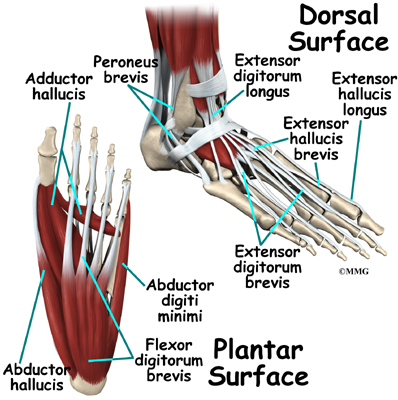
Ok, so what points? Touch beneath your big toe (1st metatarsal), find the adductor hallucis - rub it with your thumbs and place firm pressure. Next touch and find beneath the little toe (5th metatarsal), rub and place firm pressure there. Then find the inner and outer "corners" of the heel and repeat the process. Now, lace your fingers through the spaces in your toes (you will be holding hands with your feet) and create distance between your toes. This may not be comfortable. Hold for a few seconds and then release.

Moving on. Still sitting, place your foot on the floor and put pressure evenly through the four corners of the foot. Now, touch and follow the 5th metatarsal bone toward your heel until it comes to a "bump" or the tuberosity. We'll call this the "foot bone" and often refer to this outer edge of the foot as the "knife edge." Rub and place firm pressure with your fingers and press it to the floor as well. Follow this same procedure with the second foot. These are the points of your foot you want in contact with the floor in all standing poses.

Stand up.

Place your feet on the floor and make certain they are aligned. The third (and middle) toe is pointing straight forward and if you were to draw a line, it would go straight through your heel. Also check that your knee is aligned to the middle toe.

Lift ALL of your toes (even the pinkys) off the floor and feel the arch of your foot activate or "fire up" along with the peroneus muscles of your calf and foot. See if you can maintain that activation and place ONLY the big toes of both feet onto the floor. Lift them back up and do the same with ONLY the pinky toes. Lift them back up. Next try spreading the toes as far as possible from one another (mimicking the movement with your hands helps) and place them on the floor relaxed, long and spread far apart, the same as when you were holding your foot laced with your fingers.

To place your feet for a standing poses such as Tadasana.
  1. Place your big toes and their knuckle on the floor so they are touching
  2. Find the four corners and of the foot and the "foot bone"
  3. Lift onto the balls of the feet high and press through the ball and pinky toe side
  4. Press your heels together and slowly lower back down to the ground, your two legs pressing to form one
  5. Lift ALL of your toes and activate the arch and peroneus muscles
  6. Maintain the activation and place your toes back down on the floor long and create distance between them

Building from this strong base provides all of your standing poses a strong foundation.

Friday, January 25, 2008

A Letter from Tonga!

Friday, January 11, 2008

Open the Hip Flexors!

The hip flexors. Those overworked, over-stressed, over-looked muscles that we depend on everyday for walking, running, climbing stairs, sitting, standing... Why don't we take better care of them? Here's my 45 minute yoga cure:

Focus: Open Hip Flexors | Goal= Runner Twist

Utkasana with Twist (3x) – Show Pasasana Noose Pose

  1. Arms up, prayer position
    1. Exhale, take (L) hand to outside thigh, Opp to hip / back hand to kidneys
  2. Bend deeper into quads
    1. Inhale arms up, prayer position
    2. Exhale, take (L) elbow to inner (L) thigh
  3. Bend deep into quads
    1. Inhale arms up, prayer position
    2. Exhale, take (L) elbow to outer (R) thigh
Utthita Parsvakonasana (R & L) (3x)
Hug thighs together, scissor action
  1. Thumb in hip crease, fingers wrap around and align knee to front, 90°, hug hip in
    1. Front arm braces on top of front thigh to help maintain 90°, back hand on hip
  2. Lengthen inner groin forward, press and ground outside edge of back foot down
    1. Front hand on block, back hand on hip
  3. Move hamstring and inner thigh of back leg further back to “touch” the wall behind
    1. Front hand floor, back arm reaches to front of room
Virabhadrasana II (prop=heel to wall)
  1. Push wall away with heel
    1. Focus heel and outer edge of back foot
    2. Front leg 90
    3. Back leg is straight / lengthen ribs away from hips
  1. Level hips
    1. Be “light” on front leg (happens at 90!)
    2. Heavy on big toe side
    3. Do not press through back knee
  2. Reach “back” toward wall with ribs
    1. Gaze over front middle finger
    2. Place back hand on wall flat
Knee Up The Wall Pose
  1. Thumb in hip crease, fingers wrap around and align knee to front, 90°, hug hip in
    1. Scissor to square and level hips
    2. Bring hands to front knee
  2. Lengthen inner groin forward
    1. Hips square and level
  3. Move hips closer to center room
Pain in knee, bring it to the FRONT of your cap

Runner’s Lunge to Vira 1 (R & L) (3x)
  1. Thumb in hip crease, fingers wrap around and align knee to front, 90°, hug hip in
    1. Fingertips on floor
    2. Scissor to square and level hips
  2. Press through back heel, “touch” wall
    1. Keep back leg straight and strong
    2. Pull hamstring and inner thigh of back leg to ceiling
  3. Push outer foot to floor
    1. Slowly rise up keeping hips square
    2. Front knee stays at 90
    3. Pull ribs back
Runners Lunge with Twist to Parivritta Parsvakanasana
  1. Drop back knee to floor
    1. Push hip toward the floor
  2. Hands come to front thigh
    1. Engage shoulders, pull belly up
    2. Raise opposite hand feel extension
  3. Hands come to front thigh
    1. Front hand goes to opposite side – prayer arms
    2. Push through ball of foot off the floor with back leg
  4. Front hand goes to opposite side – prayer arms
    1. Push back heel, outside foot into floor
  5. Front hand goes to opposite side – prayer arms
    1. Bottom hand to tall block outside leg
    2. Knit front ribs together
    3. Back hand on hip – get to 90!
  6. Bottom hand to lowered block outside leg
    1. Bow and take lower ribs toward hips, keep neck long, look to navel, neck to neutral
  7. Bottom hand NO Block, Extend top arm
    1. Look Up!

Labels: , , , , , , , , ,

Tuesday, January 01, 2008

How Do YOU Know?

I am a very goal oriented person. Tell me I can't do something and I go one step further... I will do it and I will do it better than I ever imagined I could and certainly better than you thought I could.

This year I am tackling Personal Training. I have one new client that a co-worker referred to me - this co-worker also personal trains and takes a bulk of the % for referral. What does that mean to me?? I get a measley $20 for working her referral - MY client. *ugh* It makes me absolutely crazy if I think about it for too long.
How do I measure my success?
How do I know if I've met my goal?